Ask your projects data anything. Get answers in seconds. Plexa MCP Connector is live. See it in action
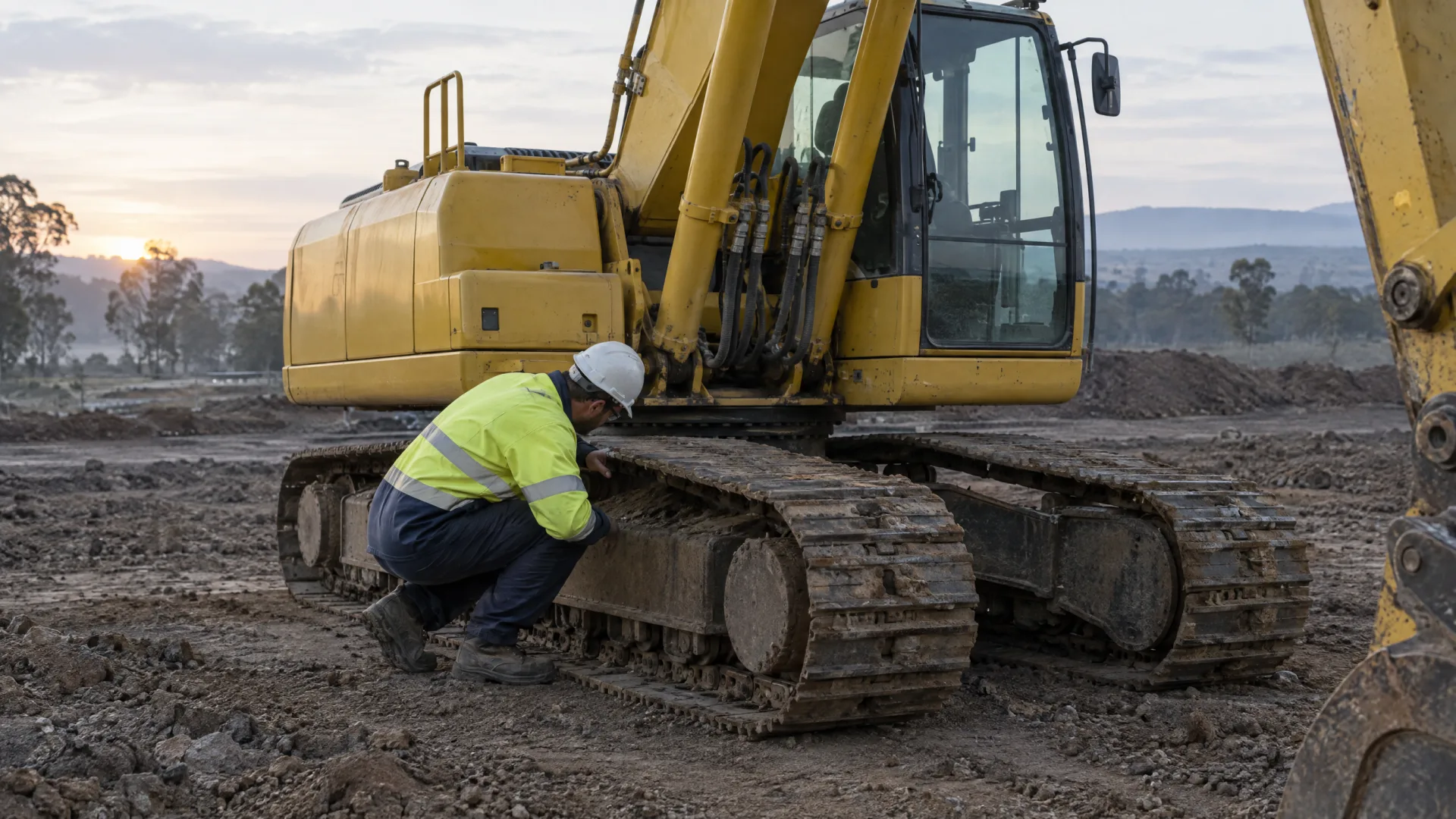
Plant risk assessment
Also known as: Plant hazard assessment, PRA
Definition
A plant risk assessment is a documented process of identifying the hazards of a specific item of plant, assessing the risks and setting controls so it can be used safely. In Australia it is the main way businesses meet their plant duties under the model WHS Regulations, and most sites require one before plant starts work.
How a Plant Risk Assessment Works
The assessment follows the standard risk management process under the model WHS Regulations: identify hazards, assess the risks, control them using the hierarchy of controls, and review the controls.
It looks at the whole life of the plant on site: delivery and set-up, normal operation, cleaning, maintenance, breakdown and removal. Hazards typically include moving parts, crushing and entanglement, overturning, collision with people, falling objects, noise, vibration, hydraulic and electrical energy, and the environment the plant works in.
For common plant, suppliers and hire companies often provide a generic plant risk assessment. The business using it should review it against the actual site conditions, such as ground, slope, overhead services, nearby workers and access, and add controls where needed.
Plant Duties Under the Model WHS Regulations
The WHS Regulations place duties on several parties. Designers, manufacturers, importers and suppliers must make sure plant is safe and provide information on its safe use. The business with management or control of plant at a workplace must manage its risks, maintain it, keep guarding in place, and make sure it is inspected and used only by competent people.
Some plant is registrable. Certain plant designs must be registered with the regulator before supply, and certain items of plant must be registered before use, such as tower cranes, some mobile cranes, lifts, building maintenance units, concrete placement units with delivery booms, and some pressure equipment. Registered items have extra requirements for records, inspection and maintenance.
Safe Work Australia's model Code of Practice on managing the risks of plant in the workplace explains these duties in practical terms. Victoria has comparable duties under its own Occupational Health and Safety Regulations.
What a Plant Risk Assessment Should Include
Plant details. Type, make, model, serial number, registration number if registrable, and owner.
Tasks and conditions. What the plant will be used for on this site, and where.
Hazards. Each hazard across set-up, operation, maintenance and removal.
Risk rating. Likelihood and consequence before and after controls.
Controls. Specific controls from the hierarchy of controls, such as guarding, exclusion zones, interlocks and training.
Operator requirements. Licence class or training needed, and familiarisation.
Inspection and maintenance. Pre-start checks, service intervals and records.
Sign-off and review date. Who prepared and approved it, and when it must be reviewed.
Common Mistakes With Plant Risk Assessments
Using the supplier's generic version unchanged. It does not know your ground conditions, overhead services or work methods.
Confusing it with a SWMS. The plant risk assessment covers the machine. The SWMS covers the high risk construction work task the plant is used for. Most sites need both.
Never reviewing it. Review after an incident, a change in use or site conditions, or a modification to the plant.
No link to inspection records. A risk assessment that relies on maintenance is only as good as the service log behind it.
Frequently asked questions
Is a plant risk assessment a legal requirement?
−
The model WHS Regulations require businesses to manage the risks of plant, and a documented risk assessment is the usual way to show that. Most principal contractors also require one before plant comes on site.
Who is responsible for the plant risk assessment?
−
The business with management or control of the plant at the workplace, which can include the plant owner, the hirer and the head contractor. Suppliers must provide safety information, but the user must check it fits the site.
What is registrable plant?
−
Plant that must be registered with the WHS regulator, either by design or as an individual item. Items include tower cranes, some mobile cranes, lifts, building maintenance units, concrete placement booms and some pressure equipment.
What is the difference between a plant risk assessment and a SWMS?
−
A plant risk assessment covers the hazards of the machine itself. A SWMS covers how high risk construction work will be done safely. If plant is used for high risk construction work, you usually need both.
How often should a plant risk assessment be reviewed?
−
Whenever something changes: after an incident, a modification, a new task or location, or when a control is found not to work. Many businesses also set a fixed review period, such as yearly.
Related terms
Browse the glossary

The AI Construction Operating System
One platform, one data model, every project. Built in Australia, for the world.
YOUR DATA, PROTECTED
Hosted on AWS Sydney with Australian data residency.


GET THE MOBILE APP
Platform
Solutions
© 2026 Plexa Pro Pty Ltd. ABN 63 668 433 136