Ask your projects data anything. Get answers in seconds. Plexa MCP Connector is live. See it in action
Mobile plant
Also known as: Powered mobile plant, mobile equipment
Definition
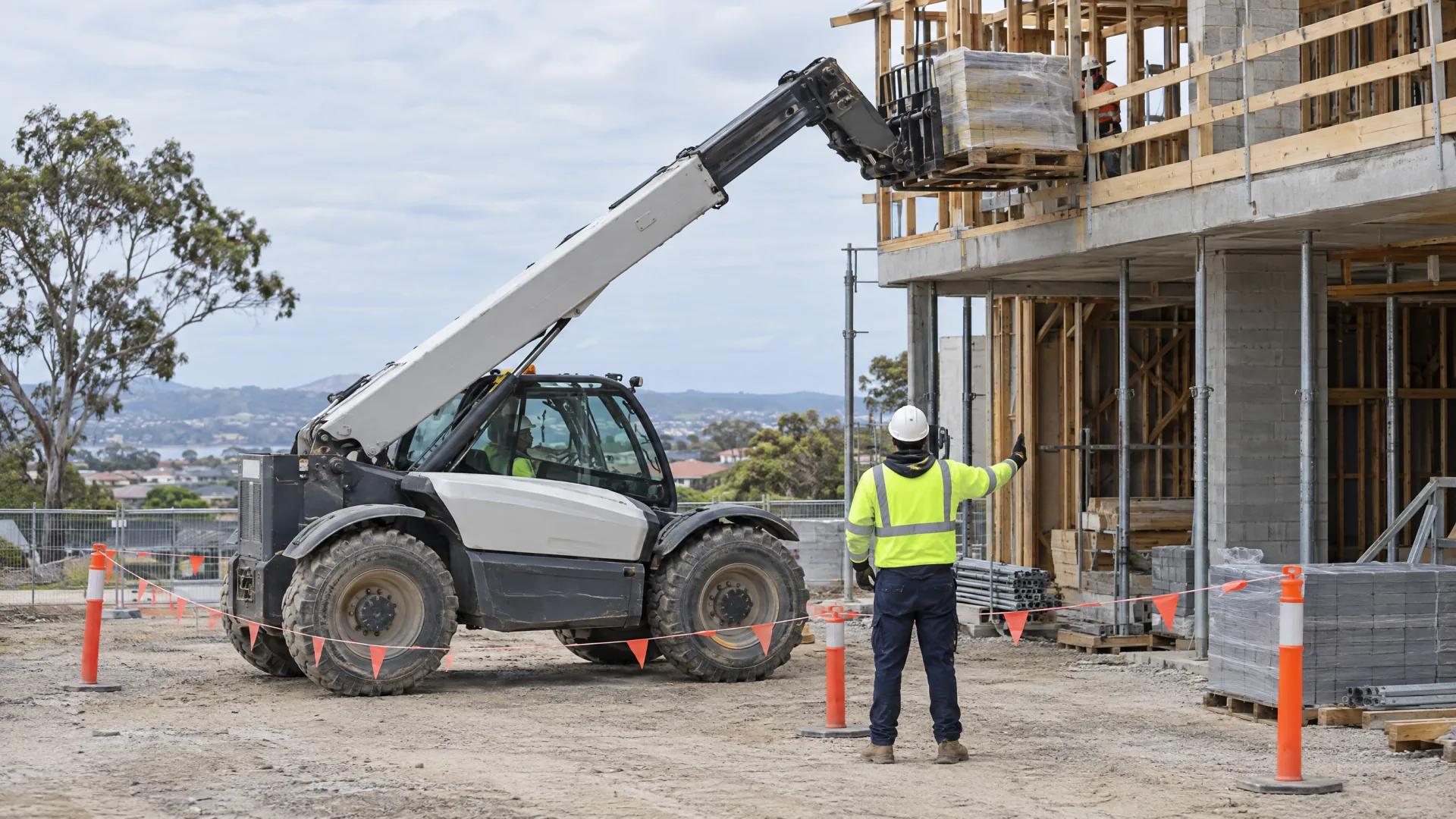
Mobile plant is any plant that moves under its own power on a construction site, such as excavators, forklifts, telehandlers, EWPs, mobile cranes, rollers and dump trucks. Under the model WHS Regulations, powered mobile plant has specific control requirements for overturning, falling objects and collisions with people.
Common Types of Mobile Plant on Construction Sites
Earthmoving. Excavators, skid steer loaders, backhoes, bulldozers, graders and rollers.
Materials handling. Forklifts, telehandlers, site dumpers and tip trucks.
Lifting. Mobile cranes, franna cranes and vehicle loading cranes.
Access. Boom lifts, scissor lifts and other EWPs.
Concrete. Concrete pumps, line pumps and agitator trucks.
Not all mobile plant is the same risk. A small roller on an open civil site is different from a telehandler working among trades in a tight inner-city basement, and the controls should reflect that.
WHS Requirements for Mobile Plant
The model WHS Regulations set general duties for managing the risks of plant, and extra requirements for powered mobile plant. The business with management or control of the plant must manage the risk of the plant overturning, things falling on the operator, the operator being thrown out, and the plant colliding with people or other plant.
Controls can include roll-over protective structures (ROPS), falling object protective structures (FOPS), seatbelts, warning devices such as reversing alarms and flashing lights, and physical separation of people from plant. Safe Work Australia's Code of Practice for managing the risks of plant in the workplace gives practical guidance. Victoria has equivalent requirements under its own OHS Regulations.
Some mobile plant also needs a licensed operator, such as forklifts, larger mobile cranes and boom-type EWPs with an 11 metre or longer boom. Others need a trained and competent operator but no licence.
When several businesses are involved, such as a hire company, a subcontractor and the head contractor, each may hold duties for the same machine at the same time. They must consult, cooperate and coordinate so it is clear who inspects, maintains and supervises the plant.
Managing Mobile Plant on Site
Most serious mobile plant incidents on construction sites involve people being struck, crushed or run over. The key controls are about keeping people and plant apart.
Traffic management plan. Set plant routes, pedestrian walkways, loading zones and site entry points, and update them as the site changes.
Exclusion zones. Barricade the operating radius of excavators and cranes, and keep workers out of the swing area.
Spotters. Use a competent spotter when visibility is limited or plant is reversing near people.
Pre-start checks. Operators inspect brakes, steering, lights, alarms, hydraulics and attachments at the start of every shift.
Maintenance and inspection. Service plant to the manufacturer's schedule and keep records.
Plant verification at entry. Check the plant risk assessment, service records and operator licence before the machine starts work.
Common Mistakes With Mobile Plant
Relying on hi-vis and alarms. Reversing alarms and high visibility clothing help, but separation is the stronger control.
Not updating the traffic plan. Routes that worked during excavation may not work once the structure is up.
Accepting plant without checking it. Hired or subcontractor plant should be checked against its risk assessment and service records on arrival.
Unauthorised attachments. Using buckets or forks as a work platform, or fitting attachments the manufacturer has not approved, has caused fatal incidents.
Frequently asked questions
What is classed as mobile plant?
−
Plant that moves around the site under its own power while working, including excavators, loaders, forklifts, telehandlers, mobile cranes, EWPs, rollers and dumpers. Fixed plant such as tower cranes and hoists is not mobile plant.
What is the biggest risk with mobile plant?
−
People being struck or run over by moving plant is one of the most common causes of serious injury and death around mobile plant. Rollovers, crushing and falling objects are also major risks.
Does mobile plant need to be registered?
−
Most mobile plant does not need item registration with the WHS regulator. Some items do, such as mobile cranes above a set rated capacity, and some designs must be registered. Check the registrable plant schedule for your state.
What is a mobile plant traffic management plan?
−
A plan that sets how plant, vehicles and people move around the site. It shows plant routes, pedestrian walkways, exclusion zones, loading areas and site entry points, and is updated as the work and site layout change.
Related terms
Browse the glossary

The AI Construction Operating System
One platform, one data model, every project. Built in Australia, for the world.
YOUR DATA, PROTECTED
Hosted on AWS Sydney with Australian data residency.


GET THE MOBILE APP
Platform
Solutions
© 2026 Plexa Pro Pty Ltd. ABN 63 668 433 136