Ask your projects data anything. Get answers in seconds. Plexa MCP Connector is live. See it in action
Hierarchy of controls
Also known as: Hierarchy of risk control, risk control hierarchy
Definition
The hierarchy of controls is a ranked list of ways to control a workplace hazard, from most to least effective: elimination, substitution, isolation, engineering controls, administrative controls and personal protective equipment (PPE). Under the model WHS Regulations, Australian businesses must work down it in order when managing risks.
The Hierarchy of Controls Explained
The hierarchy ranks control measures by how reliably they protect people. Controls at the top remove or physically separate the hazard. Controls at the bottom rely on people doing the right thing every time.
Elimination. Remove the hazard completely, for example by prefabricating at ground level so nobody works at height.
Substitution. Replace the hazard with something less dangerous, such as a water-based product instead of a solvent-based one.
Isolation. Separate people from the hazard by distance or barriers, such as exclusion zones around mobile plant.
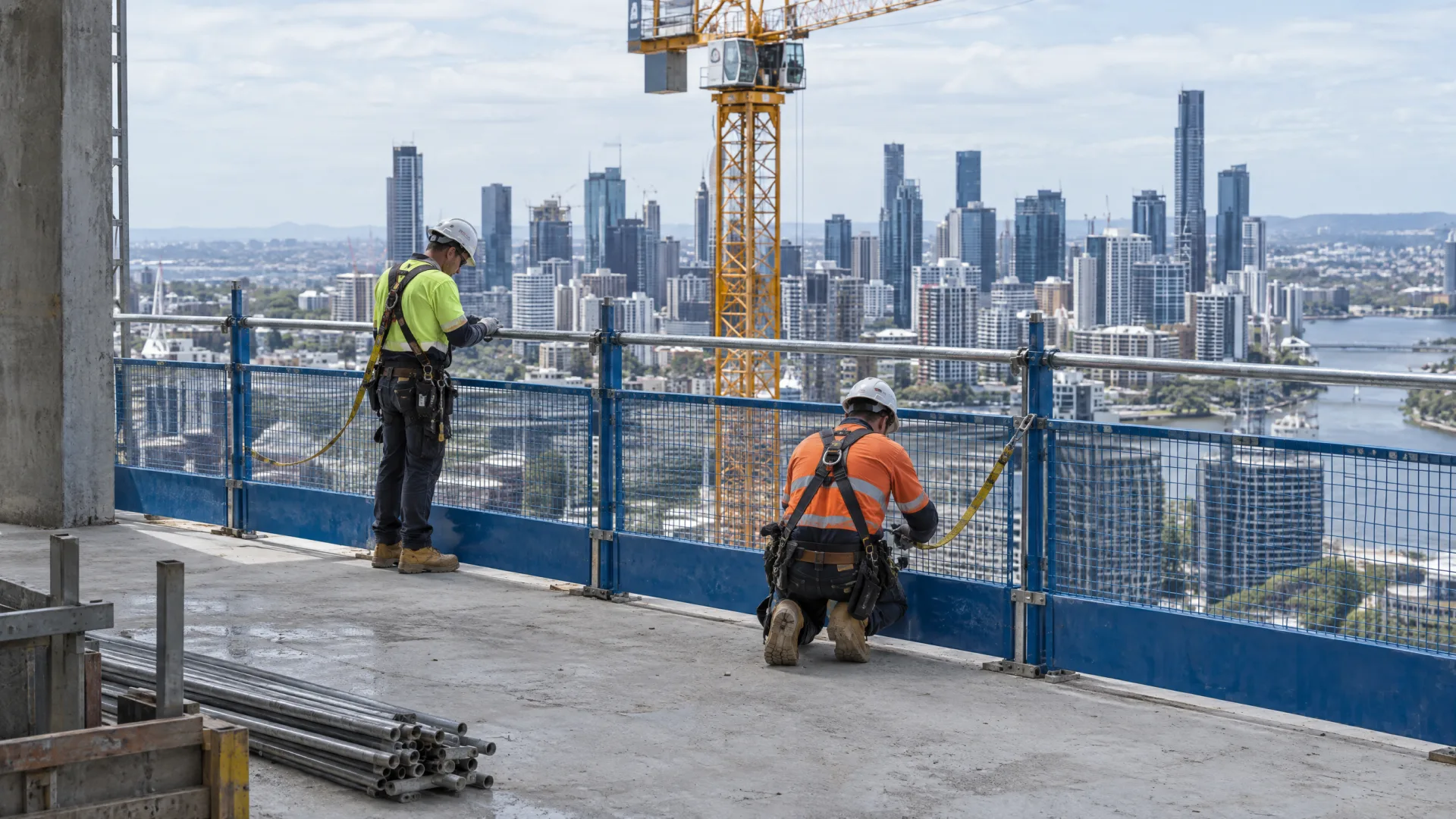
Engineering controls. Physical changes to plant, equipment or processes, such as guardrails, on-tool dust extraction or interlocks.
Administrative controls. Procedures, training, signage, permits and job rotation.
PPE. Hard hats, harnesses, gloves, respirators and hearing protection.
Safe Work Australia groups these into three levels. Level 1 is elimination. Level 2 is substitution, isolation and engineering controls. Level 3 is administrative controls and PPE.
What the Law Requires
Under the model Work Health and Safety Act 2011, a person conducting a business or undertaking (PCBU) must eliminate risks so far as is reasonably practicable, and if that is not possible, minimise them so far as is reasonably practicable.
The model WHS Regulations then set out the order. If a risk cannot be eliminated, the PCBU must minimise it by substitution, isolation or engineering controls, or a combination. If a risk remains, it must be minimised using administrative controls, and then PPE for whatever risk is left. Most states and territories have adopted this wording. Victoria's Occupational Health and Safety Regulations 2017 apply a similar hierarchy to specific hazards such as falls, so check the regulation that covers your hazard.
How the Hierarchy of Controls Works on Site
In practice, you rarely rely on a single control. A good SWMS or JSA usually combines several, starting as high up the hierarchy as is reasonably practicable and adding lower-level controls to deal with the risk that remains.
Take silica dust from cutting concrete. Elimination might mean designing the penetration in before the pour. If cutting is still needed, the next step is engineering controls such as wet cutting or on-tool extraction. Administrative controls then cover who can be in the area and for how long, and respiratory protection is the final layer, not the first.
Common Mistakes With the Hierarchy of Controls
Going straight to PPE. PPE is the least effective control. It is the last line of defence, not the plan.
Treating training as a control on its own. Training and signage are administrative controls. They support higher controls but rarely manage a serious risk by themselves.
Ignoring design. The biggest gains come at design and planning stage, before anyone is on site.
Not checking the controls work. Controls must be maintained and reviewed, especially after an incident or a change in the work.
Frequently asked questions
What are the 6 levels of the hierarchy of controls?
−
Elimination, substitution, isolation, engineering controls, administrative controls and personal protective equipment (PPE). Safe Work Australia groups them into three levels: elimination at Level 1, substitution, isolation and engineering at Level 2, and administrative controls and PPE at Level 3.
Is the hierarchy of controls a legal requirement in Australia?
−
Yes. The model WHS Regulations require businesses to eliminate risks where reasonably practicable, and otherwise minimise them by working down the hierarchy in order. Victoria applies a similar hierarchy through its own OHS Regulations for specific hazards.
Why is PPE the least effective control?
−
PPE does nothing to the hazard itself. It only works if it is the right type, fits properly, is maintained and is worn correctly every time. If any of those fail, the worker is exposed.
What is an example of an engineering control in construction?
−
Guardrails on an open edge, on-tool dust extraction on a saw, a falling object protection structure on plant and machine guarding are all engineering controls. They physically change the work or equipment to reduce the risk.
Can you combine control measures?
−
Yes, and you usually should. Start as high up the hierarchy as is reasonably practicable, then add lower-level controls such as procedures and PPE to manage the remaining risk.

Free Playbook
The Missing AI Playbook for Construction Safety
Learn practical AI workflows for incident reports, SWMS, compliance checks, safety data and training, with real prompts you can use and review yourself.
Related terms
Browse the glossary
Free tools
All free resources

The AI Construction Operating System
One platform, one data model, every project. Built in Australia, for the world.
YOUR DATA, PROTECTED
Hosted on AWS Sydney with Australian data residency.


GET THE MOBILE APP
Platform
Solutions
© 2026 Plexa Pro Pty Ltd. ABN 63 668 433 136