Ask your projects data anything. Get answers in seconds. Plexa MCP Connector is live. See it in action
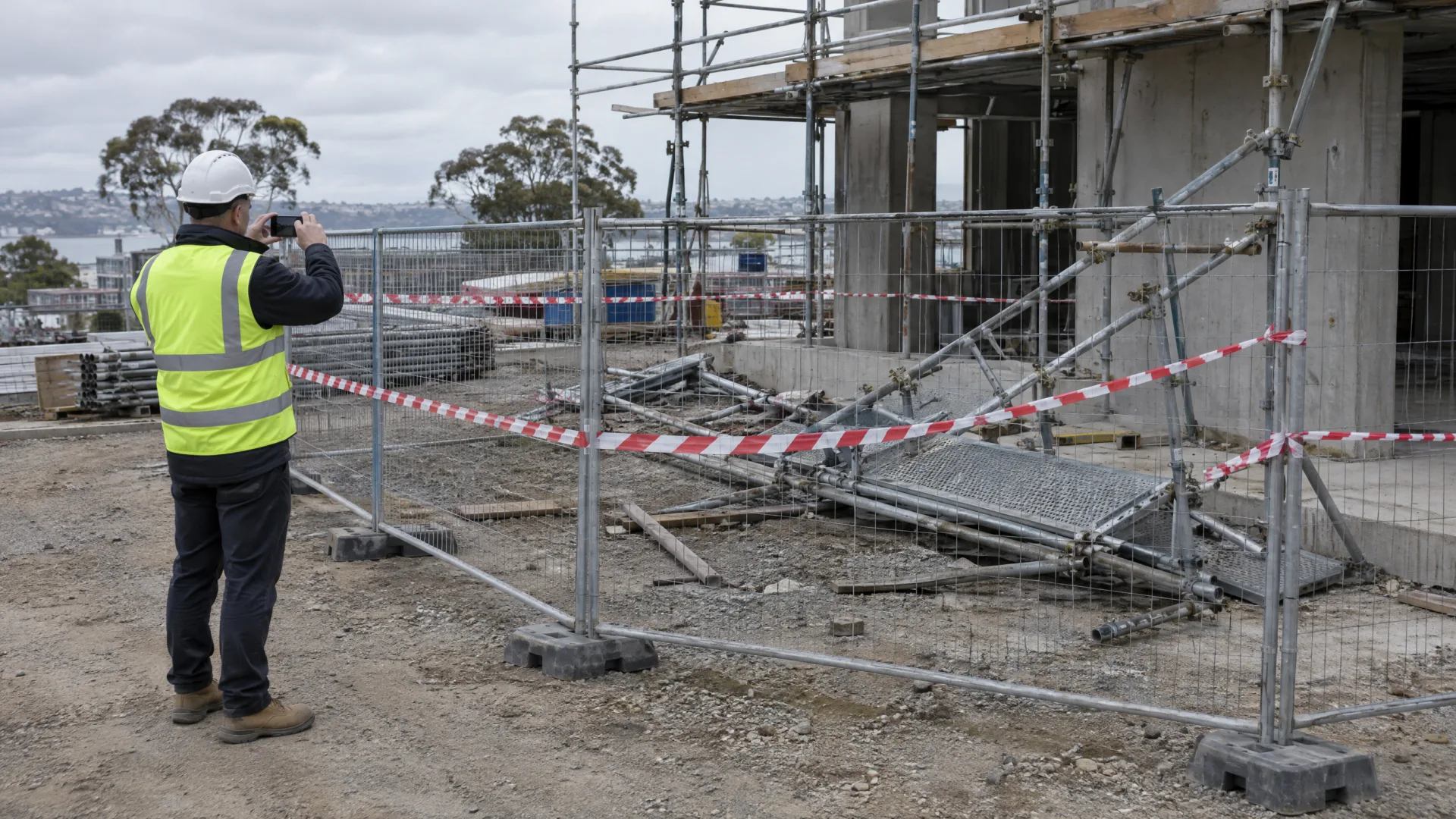
Notifiable incident
Also known as: Reportable incident
Definition
A notifiable incident is a workplace death, serious injury or illness, or dangerous incident that must be reported to the work health and safety regulator immediately after the business becomes aware of it. The incident site must also be preserved until an inspector arrives or directs otherwise.
What Counts as a Notifiable Incident
Sections 35 to 37 of the model Work Health and Safety Act 2011 define three types of notifiable incident:
Death. The death of any person arising out of the conduct of the business or undertaking.
Serious injury or illness. One that needs immediate treatment as an in-patient in hospital, or immediate treatment for listed injuries such as an amputation, serious head or eye injury, serious burn, spinal injury, loss of a bodily function or serious laceration, or medical treatment within 48 hours of exposure to a substance.
Dangerous incident. An incident that exposes anyone to a serious risk from an immediate or imminent exposure, even if nobody is hurt.
On construction sites, dangerous incidents are the category people most often miss. They include the collapse, overturning or failure of a load-bearing part of a structure, the collapse or partial collapse of an excavation that needs shoring, plant such as a crane or EWP (elevated work platform) collapsing or overturning, a fall or release from height of plant, substance or thing, an uncontrolled escape of gas or a fire, contact with live electricity, and damage to a service such as a gas or electricity line.
For a deeper look, read Notifiable Incidents in Construction: What You Must Report, and When.
How to Notify the Regulator
Under section 38 of the model Act, the PCBU (person conducting a business or undertaking) must notify the regulator immediately after becoming aware of a notifiable incident, by the fastest possible means, usually phone or the regulator's online form. If the regulator asks for written notice, it must be given within 48 hours of that request.
The PCBU must keep a record of each notifiable incident for at least 5 years from the day notice is given.
Section 39 requires the site where the incident happened to be left undisturbed until an inspector arrives or the regulator says otherwise. You can still help an injured person, remove a deceased person, make the site safe or do what police require.
Notifiable Incidents in Victoria
Victoria uses the Occupational Health and Safety Act 2004, which sets out its own definition of incidents that must be notified to WorkSafe Victoria. The categories are broadly similar, but the lists of injuries and dangerous occurrences are worded differently.
The process also differs. In Victoria, the employer or self-employed person must notify WorkSafe immediately and then provide a written record within 48 hours, whether or not it is requested. The site must also be preserved. WA follows the model framework under its Work Health and Safety Act 2020, but always check the regulator in the state where the incident happened.
Common Mistakes With Notifiable Incidents
Not reporting near misses that qualify. A collapsed trench or a fallen load with nobody hurt can still be a dangerous incident.
Waiting for the full facts. The duty is to notify immediately. Investigation comes after.
Cleaning up too soon. Moving plant, materials or barriers before the regulator releases the site can be a breach.
Assuming the principal contractor reported it. Every PCBU involved has a duty. Agree who notifies, then confirm it was done and recorded.
Frequently asked questions
What is a notifiable incident under WHS law?
−
Under the model WHS Act, a notifiable incident is the death of a person, a serious injury or illness, or a dangerous incident arising out of the conduct of a business or undertaking. Each must be reported to the WHS regulator immediately.
How quickly must a notifiable incident be reported?
−
Immediately after becoming aware of it, by the fastest means available. Under the model WHS Act, written notice is due within 48 hours if the regulator asks for it. In Victoria, a written record is required within 48 hours in all cases.
Is a near miss a notifiable incident?
−
It can be. If the near miss exposed someone to a serious risk from an immediate or imminent exposure, such as a trench collapse, a crane overturning or a dropped load, it is likely a dangerous incident and must be notified even though nobody was hurt.
Who is responsible for notifying the regulator?
−
The PCBU (person conducting a business or undertaking) from whose work the incident arises. On a construction site several PCBUs may share that duty, so the principal contractor and subcontractor should agree who notifies and keep a record.
How long must notifiable incident records be kept?
−
Under the model WHS Act, a record of each notifiable incident must be kept for at least 5 years from the day notice was given to the regulator.

Free Playbook
The Missing AI Playbook for Construction Safety
Learn practical AI workflows for incident reports, SWMS, compliance checks, safety data and training, with real prompts you can use and review yourself.
Related terms
Browse the glossary

The AI Construction Operating System
One platform, one data model, every project. Built in Australia, for the world.
YOUR DATA, PROTECTED
Hosted on AWS Sydney with Australian data residency.


GET THE MOBILE APP
Platform
Solutions
© 2026 Plexa Pro Pty Ltd. ABN 63 668 433 136